

What are the signs that you need hormone replacement therapy
Hormones serve as the chemical messengers of the human body, directing essential bodily functions including metabolic rate, emotional regulation, sleep cycles, sexual health, cognitive focus, and bone density. Because hormonal networks operate in a delicate balance, even slight fluctuations can create a ripple effect across physical and mental well-being.
As women transition through perimenopause and menopause, and as men experience the gradual age-related decline in androgen production known as andropause (or hypogonadism), hormonal depletion often manifests through disruptive, persistent symptoms.
Recognizing these indicators early is the first step toward reclaiming your quality of life. Below is an evidence-based overview of the key signs that suggest you may benefit from a clinical evaluation for hormone replacement therapy (HRT), how diagnostic testing works, and how personalized compounding solutions support individualized care.
What Is Hormone Replacement Therapy (HRT)?
Hormone replacement therapy is a medically supervised treatment designed to restore deficient hormones—most commonly estrogen, progesterone, testosterone, and DHEA—back to physiological balance.
While hormonal decline is a natural part of aging, the severity and breadth of symptoms vary significantly between individuals. When symptoms impair daily functioning, productivity, sleep, or intimate relationships, clinicians evaluate whether replacing or balancing target hormones can alleviate distress and help protect long-term bone and metabolic health.
Key Signs You May Need HRT: In Women
In women, hormonal shifts accelerate during perimenopause (often starting in the late 30s or 40s) and culminate in menopause, when ovarian production of estrogen and progesterone drops sharply.
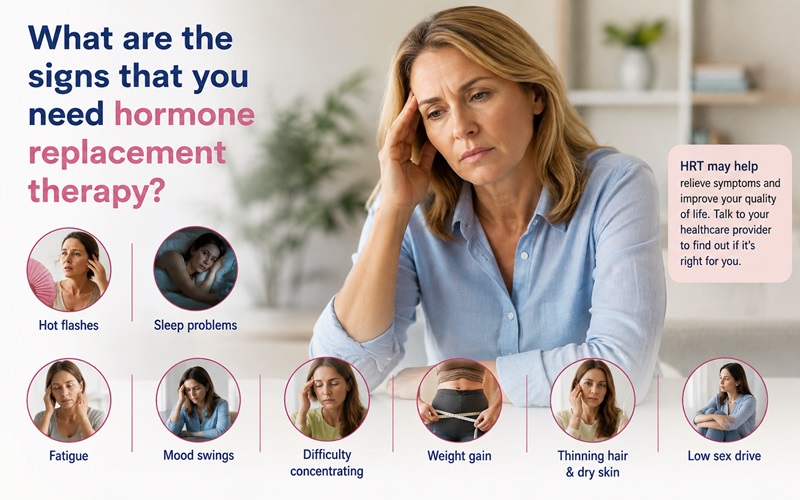
Vasomotor Symptoms (Hot Flashes & Night Sweats)
Vasomotor episodes are the hallmark signs of declining estrogen. The hypothalamus, which acts as the body’s internal thermostat, becomes hypersensitive to slight temperature fluctuations. Women experience sudden waves of intense heat across the face, neck, and chest, accompanied by profuse sweating, rapid heartbeats, and subsequent chills. When these occur during sleep (night sweats), they severely fragment sleep architecture.
Persistent Sleep Disturbances and Insomnia
Declining levels of progesterone—a neurosteroid that promotes calming neurotransmitters like GABA—often lead to chronic insomnia, difficulty falling asleep, and frequent nighttime awakenings. Coupled with night sweats, sleep deprivation compounds daytime fatigue and emotional volatility.
Mood Changes, Irritability, and Brain Fog
Estrogen receptors are distributed throughout regions of the brain responsible for executive function, memory retrieval, and serotonin regulation. Many women report sudden mood swings, unprovoked anxiety, depressive symptoms, forgetfulness, and pervasive “brain fog” that undermines workplace productivity and personal confidence.
Vaginal Dryness and Dyspareunia (Painful Intercourse)
Estrogen maintains the thickness, elasticity, and natural lubrication of the vaginal epithelium. As levels drop, the genitourinary syndrome of menopause (GSM) develops, causing chronic vaginal dryness, itching, burning, painful sexual intercourse, and recurrent urinary tract discomfort.
Unexplained Weight Gain and Slower Metabolism
Hormonal imbalances, particularly reduced estrogen paired with altered cortisol and insulin sensitivity, often shift adipose distribution. Women frequently notice a stubborn accumulation of visceral abdominal fat alongside diminished lean muscle mass, despite maintaining consistent dietary and exercise routines.
Decreased Libido and Thinning Hair
A simultaneous reduction in bioavailable testosterone and DHEA contributes to an abrupt drop in sexual desire, reduced sensitivity, and sluggish energy. Diminishing estrogen can also alter hair follicle growth cycles, leading to thinning hair and dry, less elastic skin.
Key Signs You May Need HRT: In Men
Hormonal decline in men tends to occur more gradually than in women—testosterone levels typically decline by approximately 1% per year after age 30. However, when levels drop below healthy physiological ranges, the symptoms can be profound.
Chronic Fatigue and Low Vitality
Men with clinically low testosterone (hypogonadism) frequently report persistent exhaustion that does not resolve with adequate sleep. This is often accompanied by mid-afternoon energy crashes and a general lack of motivation.
Loss of Muscle Mass and Increasing Body Fat
Testosterone is a primary anabolic hormone required for muscle protein synthesis and metabolic regulation. Men experiencing androgen deficiency often see a steady decline in strength, reduced exercise recovery, and an increase in central body fat or gynecomastia (breast tissue tenderness/enlargement).
Erectile Dysfunction and Diminished Libido
One of the most common signs prompting medical consultation is a noticeable decrease in sexual desire, reduced spontaneous morning erections, and difficulties achieving or maintaining firm erections.
Depressed Mood and Loss of Drive
Low testosterone is strongly correlated with emotional blunting, irritability, difficulty concentrating at work, lack of confidence, and symptoms resembling mild to moderate depression.
How to Determine If HRT Is Right for You
Experiencing the symptoms above does not mean you should immediately begin hormone therapy without clinical validation. Safe, effective hormone optimization requires a thorough medical evaluation:
- Comprehensive Laboratory Diagnostics: A clinician must review complete blood or saliva panels. For women, this typically includes estradiol, estrone, estriol, progesterone, total and free testosterone, DHEA-S, FSH, LH, and thyroid profiles. For men, testing evaluates total and free testosterone, SHBG, estradiol, and PSA.
- Review of Personal and Family History: Hormone therapy must be weighed against individual risks, including cardiovascular factors, personal or family history of hormone-receptor-positive cancers, or thromboembolic disorders.
- Determining the Delivery Route: Hormone therapy is available in several forms, including FDA-approved tablets, patches, gels and injections. Your clinician will choose the product, dose and route that fit your history, your goals and how your body responds.
Why Personalized Compounding Matters
Every person’s hormone profile, sensitivity and symptoms are different. FDA-approved hormone products serve many patients well, and they are usually the first choice. When a patient needs a strength or dosage form that is not commercially available, or needs to avoid a particular inactive ingredient, a prescriber may decide that a compounded preparation is the better fit.
That is where a 503A compounding pharmacy can help. AccuMix Pharmacy prepares patient-specific hormone therapy exactly as the prescribing clinician orders.
AccuMix Pharmacy supports healthcare providers with diverse, customized delivery options:
- Topical and Transdermal Formulations: Compounded creams and gels (such as bioidentical estradiol, estriol, progesterone, and testosterone) absorb through the skin into the bloodstream, bypassing the gastrointestinal tract and liver metabolism.
- Sublingual Troches and Rapidly Dissolving Tablets (ODTs): Fast-absorbing mucosal formulations that allow for flexible titration.
- Vaginal Creams and Suppositories: Targeted local options for genitourinary symptoms (GSM) that deliver the medication where it is needed.
- Sterile Injectable Preparations: Testosterone injections compounded to the prescribed strength for male androgen replacement therapy.
- Physiologic Rhythmic Hormone Therapy (rHRT): For qualifying female patients, prescribers can design dynamic protocols that adjust estradiol and progesterone doses cyclically to mimic the natural monthly menstrual rhythm.
Every preparation is compounded in ISO-classified cleanrooms under USP standards, with a pharmacist checking each step. Compounded medications are not reviewed or approved by the FDA.
When to Consult Your Doctor
If persistent night sweats, unexplained fatigue, brain fog, or changes in intimacy are impacting your day-to-day well-being, do not dismiss them as an inevitable consequence of getting older.
Schedule an appointment with a functional medicine specialist, endocrinologist, or qualified hormone health provider to review your symptom timeline and complete comprehensive blood work. If your clinician determines that customized, bioidentical hormone replacement therapy is right for your physiological needs, encourage them to connect with the AccuMix Pharmacy Hormone Replacement Therapy department to explore tailored formulation protocols.